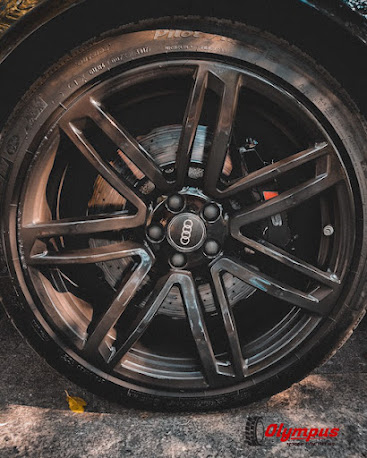
Tire sizes Explained: What Are The Different Wheel Sizes For Your Car or Van.
How to find your vehicle tyre size, for van, car or caravan for replacement or buying new tyres. If you're buying a new car or van (or even if you're repairing an older one) you'll need to know the size of the tyres you'll be using. In this post, we will explain how to find tyre sizes and what they are used for, why it is important and give some tips on choosing the right tyres for your vehicle.
Tyre Size
The tyre size is one of the most important pieces of information you need to know going into an adventure. You need to know what kind of tyres you have, what pressure you need and how much fuel your vehicle needs to run.
What's more, people who buy new tyres are often shocked when they find out that their vehicle does not come with a gauge for tyre pressure or fuel consumption. To put it simply, tyre sizes can be confusing! The first thing to do is go online and learn about the different types of tyre (tread, type, and width) - whether it is a car, van or caravan and get the most accurate information from your machine shop,
mobile tyre fitter or local dealer.
But if you are like me - I always buy my tyres locally. I don't trust apps like Tirerack and don't really trust online sites to tell me how much fuel my car needs because they either don't know how much it will actually use on any given trip (including during roadside assistance) or they don't give me enough information on what size tyres I should be using (ie: "Tires should be at least 60% inflated but no more than 80% inflated.
They should not be fitted so tight that they will cause the airbags to fail!"). Don't do this - choose a local tyre specialist who has been around for years and knows what he or she is talking about.
When choosing a tyre for your van or car we recommend finding an independent retailer who specializes in tyres. They will have loads of great tips on fitting tyres properly and giving clients personal advice based on user feedback. They will also have lots of different sizes available so you can try them all out before buying your next set from them.
Tyre Width
If you have ever driven a car, you must have noticed that the tyres on your vehicle are all different sizes. The reason for this is that each tyre manufacturer knows exactly how wide their tyre will get. They know all the sizes of road, average or sport tyres they make and they know how much they will increase their profit margin by producing those sizes.
In fact, many companies produce different tyre widths for different vehicles because it's much easier to produce a wider tyre than a narrower one. The same goes for tyres for vans: the standard size for a car is normally an inch wider than the size for a van because it's easier to manufacture these vehicles with wider tyres.
So what size tyre should I buy? For van, car and caravan? If you are not sure which type of vehicle you have - do not panic: just keep reading! First, we need to understand the difference between tread and front/rear tyres in terms of tread depth.
The first thing we need to understand is the difference between tread depth and tread width (which is known as adhesion or contact patch). Each tyre manufacturer has its own terminology, so here we use "tread depth" as a way of measuring tread depth in millimetres (aka mm).
Tread depth measures how deep grooves cut into the road surface when driving downhill and can be calculated as follows: Depth = Depth-1/2 (the ratio of tred od) Footprint Width = Width - 1/2 (the ratio of tred od) Tred = (1/2(depth) 1/2(width)) / 2 Height = Height - 1/2 Tread Width = Width - 1/2 1/2(Height) / 2 Now look at your vehicle's front or rear tyres:
If your front tyre has more contact with the road then its width is smaller than its height; if its height is greater than its width then it may be slightly narrower than its width but still not too wide so please do not panic if that happens! If both are correct then your vehicle has two types of tyres: normal and plus grip ones.
Normal Tyres Plus Grip Tyres have more contact with the road than normal ones but less contact than plus grip ones; this means that your vehicle may have two types of tyres with very similar tread depths but very different tread widths as shown above: Normal Tyres
Tyre Height
Tyre height is an interesting one. This is a term that you will encounter on the internet often, from various sources, and you'll probably come across it more often at the tire shops than anywhere else.
Every tyre brand has a recommended tyre height for their tyres, but what does "recommended" mean?
The most basic definition of "recommended" is: Recommended tyre height of your vehicle (approx) Make and model:
- Ford Transit Connect (UK)
- Ford Transit (USA)
- Kia Soul (Europe/Asia)
- Kia Soul (USA)
- Renault Master (Europe/Asia)
- Renault Master (USA)
- Toyota RAV4 Sport 4×4 (Japan/Australia/New Zealand/China/India)
- Toyota RAV4 Sport 4×4 Hybrid AWD Like any other brand definition, this one can be tweaked to include specific brands and models.
The recommended tyre height is that which gives your vehicle the best performance in terms of range and fuel consumption while being safe to drive. The perfect tyre height would also be as low as possible without sacrificing mobility.
Now, let's talk about a few other things.
1. What are the different types of tyres? There are four main types of tyres:
- Full-Size Tyres
- Mid-Size Tyres
- Smaller Tyres
- Rim Tyres
In addition to those four categories, there are also three additional categories:
- New Tyres
- Used Tyres
- Tires with special requirements
For example, if you have an SUV that has a very long wheelbase, then you need tyres with a wheelbase between 2m and 3m - which is why you see all sorts of wheelbases listed on the tyres pages here - but if you have something like a small family car then a wheelbase of around 5m might be better in order to avoid serious damage from things like rocks being thrown at your wheels from underneath the car during wet weather driving.
Also, not all rim types are made equal because some require more pressure than others; an example would be Michelin Pilot Super Sports vs Pilot Super Sports Plus vs Pilot Sport Cup 2 vs Pilot Sport Cup 1 etc etc etc The more pressure required for these specific rim types means they will tend to be heavier too on their own - which makes them harder
Tyre Load Index
Tyre Load Index is one of those things that is a bit of a mixed bag. On the one hand, it's a relatively simple concept: if you have an open road, you have a load index. If you have anything but an open road, there's no load index.
On top of that, though, there's also the issue of how to measure it. In order to set up a tyre load index calculation you need to know the following:
- The diameter of your tyres
- The maximum load they can carry (if you want to use them for off-roading, for example)
- The number of travel blocks in the tread pattern
- The width of your vehicle (i.e., how many wheels do you have)
So far we haven't really covered any of these items in any detail, but we will anyway - until we start talking about how to get accurate results from tyre loads indices! In this post, we are going to cover each item in turn and take an example from our own experience as an example of why tyre loads indices are not always reliable.
Tyre Speed Rating
Tyre speed is a basic measure of how well a tyre maintains grip on the road surface and is often regarded as a key performance parameter of tyre manufacturers (particularly in the USA, where it is measured by the "forty-five").
Tyre speed varies greatly depending on vehicle make, model and year. Regardless of whether you own a small or large car, or four-wheel drive or four-wheel drive station wagon or hatchback van, there are differences between them.
However, once you understand that tyre speed can vary significantly depending on the weight and size of your vehicle, you will have an idea of how to choose tyres for your specific vehicle. In this post, I will explain how tyres are rated for grip by two different elements: tread depth and sidewall volume.
In both cases, I will demonstrate using data from three different websites (the Tyre Ratings Engine (TREN), Speedometer - UK Speedo Shop (UKSPEED) and Speedometer.com) as well as other sources to explain what these data mean in terms of what you can expect from tyres when choosing them for your particular vehicle.
You may have heard that certain brands of tyres come with a "speed rating" based on their tread depth (how deep they go into the tyre), but this isn't quite right because the amount of traction gained is not necessarily proportional to tread depth - if you increase it simply because there isn't any tread left at all, then it won't actually improve grip.
A better way to think about it is that with different types of tyres, traction is affected by two main things:
- The specific shape and profile of the track between the tyre and road surface;
- The type of rubber used in each section (low rolling resistance compounds are usually softer than high rolling resistance compounds).
In this post we will look at different types of tyres and show how they affect traction when driving on different surfaces:
- wet roads versus dry roads
- snow-covered roads versus sand; slick surfaces versus dry pavement
- smooth surfaces versus bumpy ones
- dry pavement versus wet pavement
- gravel surfaces versus stone slabs etc.
However this information doesn't tell us much about how good our tyres are at handling these situations because we need an understanding of what makes one situation better than another. To do this we need to look at tyre performance under various conditions rather than just static measurements - i.e., we need
Stuff to Know about Tyres
If you're thinking about buying new tyres, you might have a few questions that need answering:
- How much are they going to cost me?
- What are the tyre sizes I should be looking for?
- What are the different tyre brands for motor vehicles?
- Which tyres do I need in winter, summer or both
- and can I get them all from the same brand?
What follows is a list of some of the things that you might want to know about tyre sizes:
In order to ensure your vehicle has optimal wheel clearance, it's important to choose tyres with appropriate rim widths. The best way to ensure this is to use a tyre gauge to measure the tyre's rim size. If you're using a standard wheel alignment (as opposed to an independent wheel alignment), it'll also be necessary to use a suitable tyre pressure gauge so you can test how much pressure is required.
The wheel size used on your vehicle doesn't have any bearing on this, but in general larger sizes will require higher pressures or wider rims. You may also benefit from fitting down-rated tyres on your vehicle as they will have more grip and will help prevent when you turn left or move into the corner.
However, down-rated tyres usually come in smaller sizes than standard ones so check out our free guide for more information about choosing the right size for your individual needs.
Tyre sizes can be measured by their diameter (if available) or their width (if not). In order of increasing diameters, they go below: • 22in - 22mm • 23in - 23mm • 24in - 24mm • 25in - 25mm • 26in - 26mm • 27in - 27mm • 28in - 28mm • 29in - 29mm • 30in - 30mm • 31in - 31 mm • 32in - 32 mm
Conclusion
I hope you've enjoyed this post. At one point, I was going to write a whole book about tyre sizes, how to find them and what to do with them, but I didn't have the time for it and thought that would be better left for another day.
The last few years have seen a surge in interest in tyre sizes. This is partly due to the huge decrease in the cost of tyres - thanks to better materials and more intelligent design - but it is also because of a worldwide increase in vehicle ownership. In fact, we are now likely to see an increase in new cars every year, with many more of these vehicles being bought by people who don't drive them too often.
Many people still think that you can buy tyres at car dealerships or big box stores and that they will come at a fair price (in fact the opposite is usually true). But the reality is that tire size is very much dictated by the vehicle itself - and not by anything you can buy at your local car dealership (or even online). You can ask for guidance and advice about tyre size from
Olympus tyres Hertfordshire.
For example, if you buy a new small SUV then your tyre size will reflect this: anything between 15-18 inches wide will be suitable for SUVs. If you buy a new small sedan then your tyre size will reflect this: anything between 18-22 inches wide will be suitable for sedans. The same goes for vans: anything from 16-21 inches wide will accommodate vans (as long as they are comfortable enough) whereas anything from 21-25 inches wide will accommodate minivans (and vans with higher seating capacities are generally bigger than minivans).
So there's no need to feel guilty about buying tyres which are too small or buying those which are too large; most manufacturers were quite happy for us to do so initially without any ill effect on customer satisfaction or their bottom line as long as we kept our word about fitting requirements. And as long as we kept our word about fitting requirements, they usually took our word when it came to fitting requirements anyway.
But if we go back far enough in time then there was probably no such thing as "fitting requirement" until something like an ABS standard was created around it (which came after something like an ISO standard had already been set up). So get used to buying tyres based on whether you want them fitted or not!